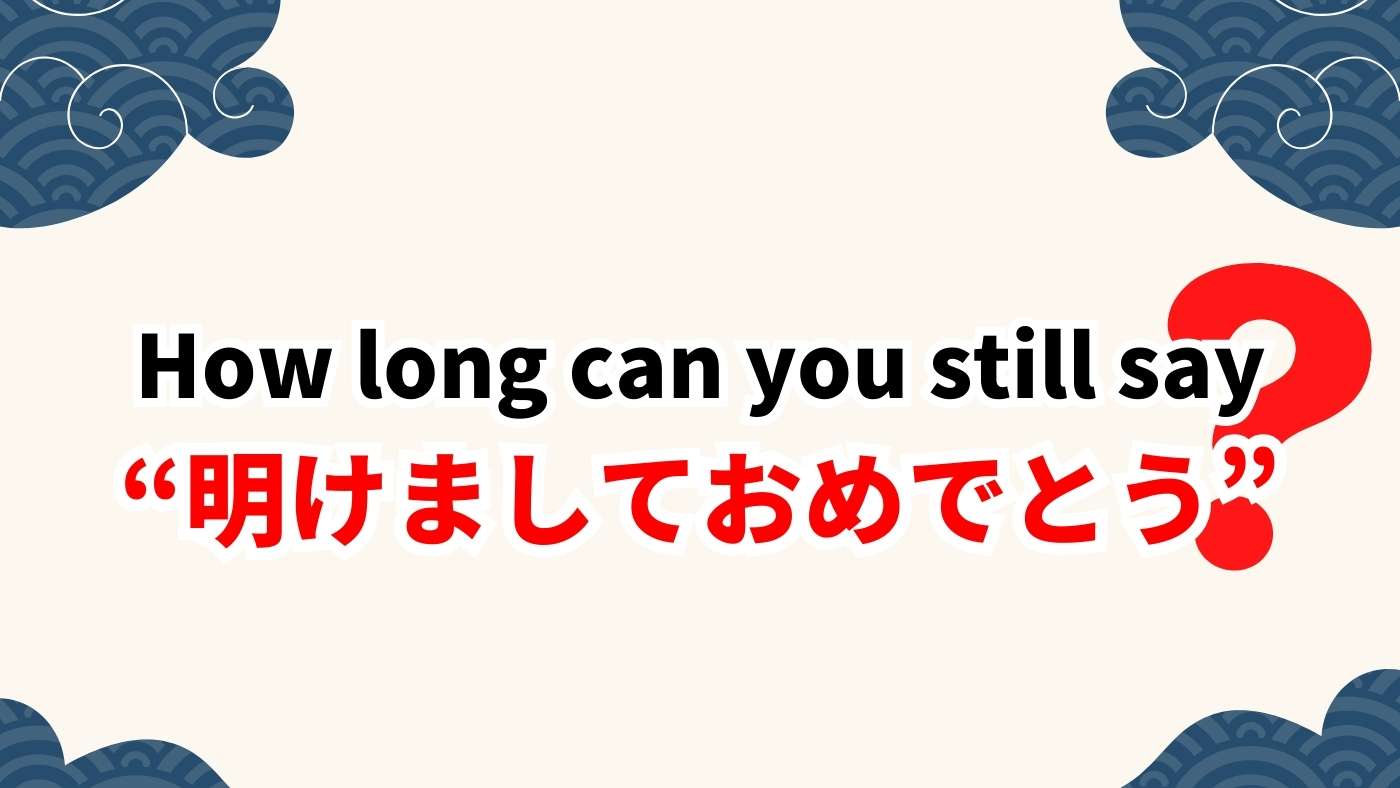
Why “明けましておめでとう” Is Not Just One Phrase?
Japanese New Year greetings may look simple at first, but they reflect politeness, social distance, and timing.
Learners often ask:
- Which phrase is correct?
- How long can you say it?
- Why are there so many versions?
In reality, Japanese New Year greetings are not governed by strict rules.
They are shaped by context, relationship, and level matching.
In this article, we will look at:
- how long people actually say 「明けましておめでとう」
- how timing matters more than dates
- how different expressions change tone and level
- how to combine greetings naturally
Is There a Time Limit for Saying 「明けましておめでとう」?
There is no official or strict deadline for saying「明けましておめでとう(ございます)」 in Japanese.
In real usage:
- It is most commonly said during the first three days of January, known as 三が日/Sanganichi (January 1–3).
- It is also very natural to say it during the first week of January.
- Even later in the month, it may still be used when meeting someone for the first time that year.
What matters most is not the date itself, but whether this is your first interaction of the year with that person.
Greetings After 三が日
After the first three days of January, especially in messages or on social media, people often add a softening phrase at the beginning.
A very common expression is 「遅ればせながら」, which politely acknowledges that the greeting is late.
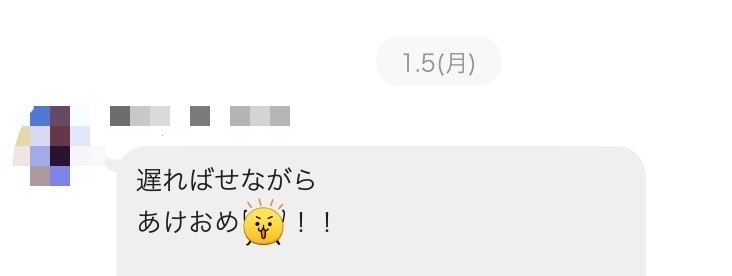
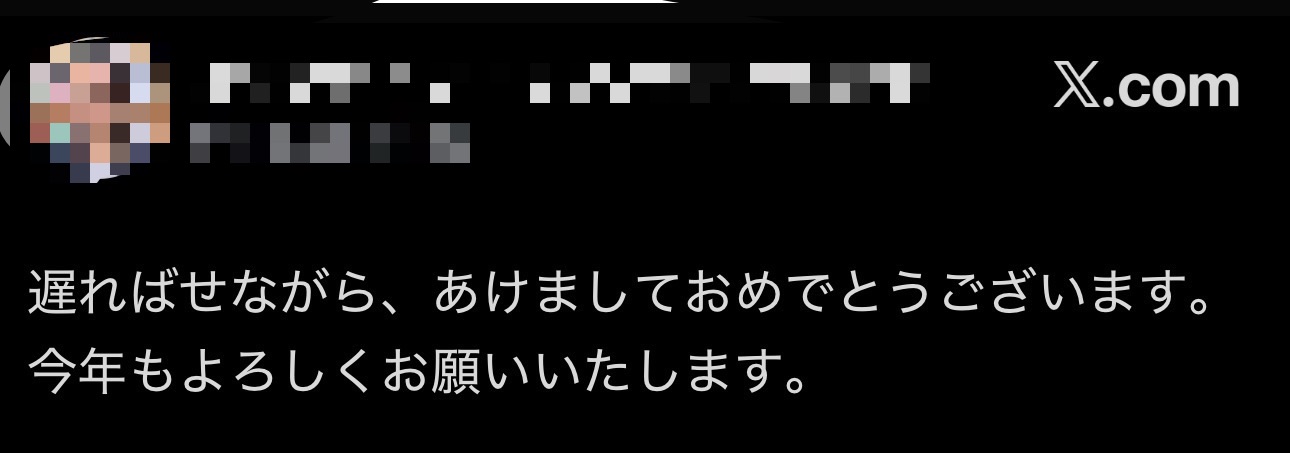
Example:
遅ればせながら、明けましておめでとうございます!
“Belatedly, Happy New Year!”
This phrase is frequently used in:
- text messages and emails
- social media posts
- situations where you did not have earlier contact in the new year
By using 遅ればせながら, the speaker shows awareness of timing and social context, rather than following a rigid rule.
This small phrase often sounds very natural to native speakers and gives the impression that you understand Japanese social nuance.
What Actually Matters: Timing and Relationship
Japanese New Year greetings follow social logic, not a fixed calendar rule.
In general:
– The closer or more important the person is, the earlier the greeting is exchanged.
– With coworkers or clients, the greeting often appears at the first work-related interaction of the year.
– With friends, it may be said casually even days later.
This is why native speakers rarely think in terms of “until when,” but instead think in terms of when and with whom.
For many learners, this can feel unusual.
In fact, it often feels like Japanese speakers say
「明けましておめでとう」
for a much longer period than people say “Happy New Year” in other languages.
This is not because Japanese has a longer “New Year season,”
but because greetings are tied to social timing and first contact, not just the calendar.
Before Looking at Variations: One Important Rule
Before exploring different expressions, it is important to understand one core idea:
Japanese New Year greetings work as sets rather than isolated phrases.
This means:
- politeness level matters
- casual and formal forms should not be mixed
- expressions should match the relationship and situation
With this in mind, we can now look at the actual variations of
「明けましておめでとう」 and 「よろしくお願いします」
and how they are naturally combined.
👉 The next section breaks these expressions down by level, tone, and usage.
Variations of “明けましておめでとう”
Tone, Level, and Natural Combinations
Japanese New Year greetings change depending on politeness level, relationship, and context.
There is no single “correct” expression — what matters is choosing forms that match each other.
Variations of New Year Greetings (from casual to formal)
| Level | Japanese | English | Nuance |
|---|---|---|---|
| Very casual | あけおめ/ことよろ | Happy New Year / Cheers for this year | Slang, spoken only, close friends |
| Casual | 明けましておめでとう 今年もよろしく | Happy New Year / Let’s get along this year | Friendly, relaxed |
| Polite | 明けましておめでとうございます 今年もよろしくお願いします | Happy New Year / I look forward to working with you this year | Standard polite |
| Very polite | 明けましておめでとうございます 今年もよろしくお願いいたします | Happy New Year / I respectfully look forward to working with you | Formal, business use |
| Most formal (written) | 新年明けましておめでとうございます 本年もよろしくお願いいたします | Happy New Year / I respectfully look forward to your continued support this year | Ceremonial, official writing |
Main Variations of “明けましておめでとう”
🔹 Very Casual (spoken, close friends only)
あけおめ
Meaning: “Happy New Year” (shortened, slang-like)
Nuance:
- very casual
- spoken language only
- used with close friends of the same generation
- not used in writing or formal settings
🔹 Casual / Neutral
明けましておめでとう
Meaning: “Happy New Year”
Nuance:
- neutral and friendly
- safe in casual conversations
- often used with friends, classmates, neighbors
🔹 Formal / Polite
明けましておめでとうございます
Meaning: “Happy New Year” (polite)
Nuance:
- polite and standard
- used at work
- used in formal emails
- used with people you are not close to
🔹 Very Formal (written / ceremonial)
新年明けましておめでとうございます
Meaning: “Happy New Year” (very formal)
Nuance:
- more formal and ceremonial
- often seen in written greetings, announcements, official messages
- sounds stiff in everyday conversation
Variations of “よろしくお願いします” (Often Used Together)
New Year greetings are very often followed by a second phrase about the coming year.
🔹 Very Casual
ことよろ
(short for 今年もよろしく)
Nuance:
- extremely casual
- used only among close friends
- spoken language only
🔹 Casual / Neutral
今年もよろしく
Meaning: “Let’s get along again this year”
Nuance:
- friendly and relaxed
- common in casual conversation
🔹 Polite
今年もよろしくお願いします
Meaning: “I look forward to working with you this year”
Nuance:
- polite and versatile
- common in workplaces and polite conversations
🔹 Very Polite / Formal
今年もよろしくお願いいたします
本年もよろしくお願いいたします
Nuance:
- very polite and formal
- commonly used in business emails and official messages
- 本年 sounds more formal and written than 今年
今年 vs 本年 (Quick Explanation)
- 今年: neutral and conversational
- used in speech and polite everyday communication
- used in speech and polite everyday communication
- 本年: formal and written
- used mainly in business emails, announcements, and official texts
- used mainly in business emails, announcements, and official texts
In most spoken situations, 今年 is preferred.
In formal writing, 本年 is often chosen to sound more professional.
Why2 Point: Level Matching Matters
本年 is a formal, written-oriented word.
Because of this, it usually appears only with higher politeness levels, such as:
- 本年もよろしくお願いいたします
- 本年もよろしくお願い申し上げます
The following combinations sound unnatural, because the level does not match:
- ❌ 本年もよろしく
- ❌ 本年もよろしくお願いします
In Japanese, greetings are not built word by word.
They work as level-matched sets.
Choosing 本年 automatically raises the formality of the entire expression.
🔹 Politest / Honorific (Very Formal)
今年もよろしくお願い申し上げます
本年もよろしくお願い申し上げます
Nuance:
- extremely polite and honorific
- used in formal business emails, official letters, and ceremonial messages
- often addressed to clients, superiors, or organizations
- rarely used in everyday conversation
Key Point
- お願い申し上げます is a humble (謙譲語) expression
- it places the speaker lower and shows strong respect toward the recipient
今年 vs 本年
- 今年: formal but still closer to spoken usage
- 本年: more formal and clearly written-oriented
In most cases:
- 本年もよろしくお願い申し上げます
sounds the most formal and business-like.
This level is not about sounding “better,”
but about matching institutional distance and formality.
Important Point: Match the Politeness Level
In Japanese, it is important to keep the same politeness level within one greeting.
Natural combinations:
- あけおめ + ことよろ
- 明けましておめでとう + 今年もよろしく
- 明けましておめでとうございます + 今年もよろしくお願いします
- 新年明けましておめでとうございます + 今年もよろしくお願いいたします
Unnatural combinations mix levels and can sound strange or awkward.
👉 Japanese greetings are not about choosing “the best” phrase, but about choosing matching levels.
Key Takeaway
There is no fixed deadline or single correct phrase.
What matters is:
- your relationship
- the situation
- and whether the expressions match each other naturally
This is why Japanese New Year greetings follow social context, not strict rules.
5. What Sounds Natural in Writing vs Speaking
Many learners struggle not with the phrase itself, but with where and how it is used.
Japanese New Year greetings behave differently in writing and speaking.
Emails and Messages (Writing)
In written communication, formal forms remain acceptable for a longer time.
- Business emails
- Polite personal messages
- First contact of the year
Even in mid or late January, formal greetings still sound natural if there is context.
Examples:
明けましておめでとうございます。
本年もどうぞよろしくお願いいたします。
“Happy New Year. I look forward to working with you again this year.”
遅ればせながら、明けましておめでとうございます。
今年もよろしくお願いします。
“Belatedly, Happy New Year. I look forward to this year as well.”
In writing, acknowledging timing matters more than the date itself.
Speaking (Conversation)
In spoken Japanese, greetings are more sensitive to timing and relationship.
- Early January → greeting is expected
- After some time → greeting depends on closeness and situation
- Casual conversations adjust more quickly than formal ones
Examples:
あ、今年初めて会ったね。明けましておめでとう。
“Oh, this is the first time we’ve met this year. Happy New Year.”
遅くなったけど、明けましておめでとう!
“It’s a bit late, but Happy New Year!”
Spoken greetings rely more on shared understanding than on fixed expressions.
Key Point
- Writing favors politeness and completeness
- Speaking favors timing and relationship
- Context can make a greeting natural even later in January
Japanese does not treat New Year greetings as expired phrases.
They remain usable as long as the situation supports them.
6. Common Learner Mistakes
Here are the most common misunderstandings learners have:
- ❌ Thinking 「明けましておめでとう」 expires on January 3
→ It does not. Usage depends on first contact and context. - ❌ Worrying too much about being “late”
→ Native speakers often soften the greeting instead of avoiding it. - ❌ Using あけおめ in inappropriate contexts
→ This form is for close friends only, not emails, work, or polite situations.
Japanese New Year greetings are not about rules.
They are about reading the situation and matching the level.
. Summary
There is no fixed deadline for saying
「明けましておめでとう(ございます)」.
What matters more than dates is social context:
- whether it is your first interaction of the year
- how close you are to the other person
- and which level of politeness fits the situation
New Year greetings in Japanese reflect relationships, not rigid rules.
Japanese greetings are about connection, not calendars.
8. Podcast & Lesson (Soft CTA)
If you enjoy this kind of explanation and want to go deeper:
🎧 Podcast
Real Japanese examples explained slowly, with context and natural usage.
Spotify: https://open.spotify.com/show/1n1c0UpnnmZ9oQ92DG3OpM?si=LqS_3ubgQje_AetuPsc51Q
Apple Podcasts: https://podcasts.apple.com/us/podcast/why-why-nihongo/id1867076413
📘 Patreon
https://www.patreon.com/cw/whywhynihongo
On Patreon, you can read a simpler Japanese version of this article in easy, learner-friendly Japanese,
along with structured lessons and deeper grammar explanations beyond textbooks.