Before you start: Level 3 recap
This article is Level 4.
It builds directly on Level 3, where we learned that は and が control information flow.
If you haven’t read Level 3 yet, start here first:
👉 What Is the Difference Between は and が? New and Known Information in Japanese (Level 3)
Level 4 assumes you already understand new vs known information.
What you learn in Level 4 (N2)
At Level 4,
は and が are no longer just about information.
They start to show:
・what the speaker compares
・what the speaker limits
・what the speaker wants you to notice
In other words,
they reveal the speaker’s hidden intention.
Ha and Ga Difference: Level-by-Level Overview
| Level | Learning Stage | Role of は (wa) | Role of が (ga) |
|---|---|---|---|
| 1 | Beginner (N5 early) | Describe things. Sentence topic “talking about ~” 私は学生です。 | Existence / events“exist / happen” 雨が降ります。 |
| 2 | Beginner (N5 late–N4) | What is visible / already shared 私は野田です。 | Choosing / identifying 私が野田です。 |
| 3 | Intermediate (N3) | Known information topic continuation 犬は庭にいます。 | New information first mention 犬が庭にいます。 |
| 4 | Intermediate (N2) | Contrast / generalization コーヒーは飲みます。 | Limitation / emphasis 私が行きます。 |
| 5 | Advanced (N1) | Contextual topic 日本語は難しいが、面白い。 | Information focus 日本語が難しい。 |
| 6 | Advanced (N1+) | Stylistic choice / stance marking 私がやりたい。 | Intentional emphasis 私はやりたい。 |
は : Contrast / Generalization
(What is not said matters)
は often carries meaning by implication.
The sentence itself looks simple,
but the speaker is quietly comparing.
Example 1
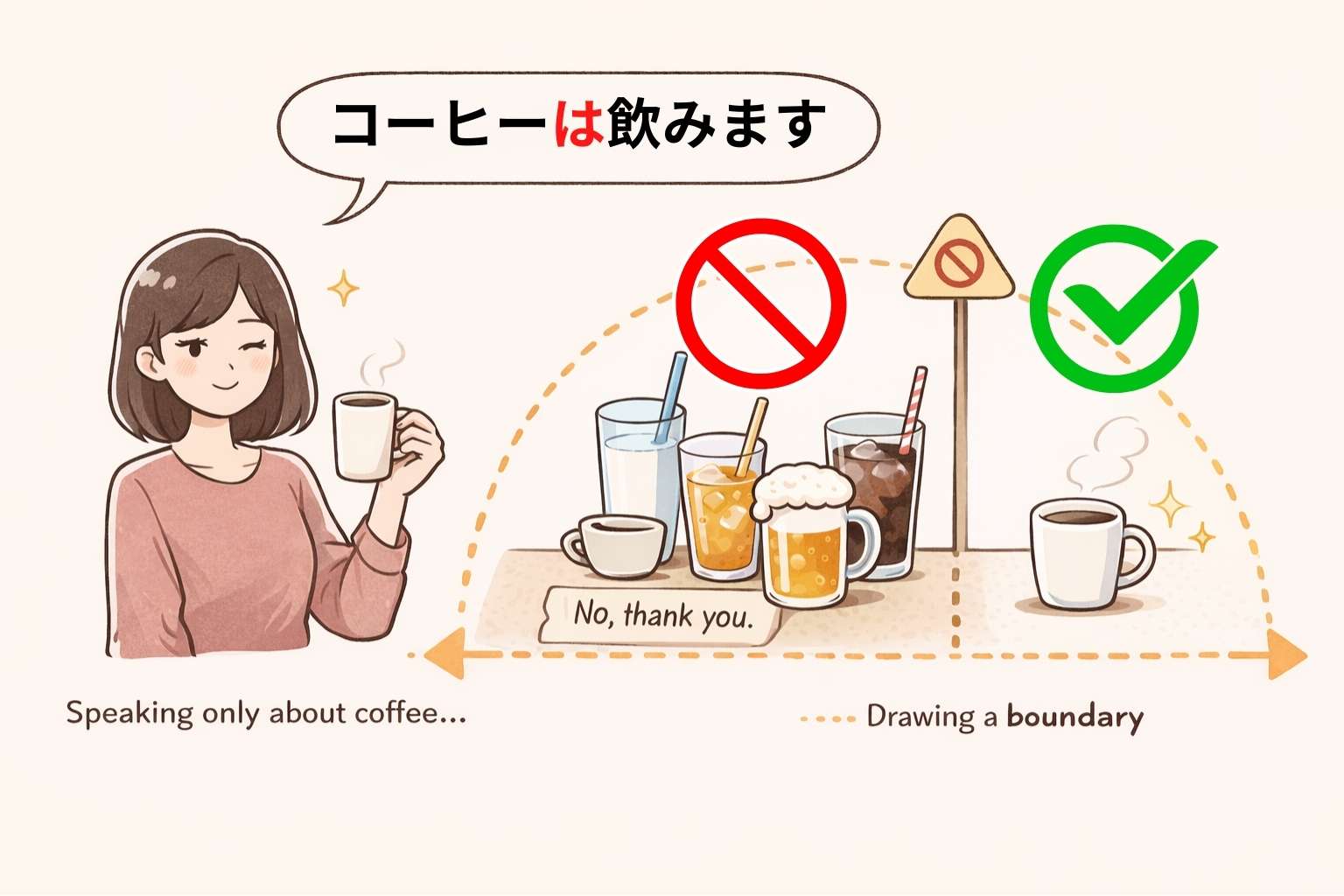
コーヒーは飲みます。
Literal meaning:
“I drink coffee.”
Hidden nuance:
(I drink coffee, but not other drinks)
(I want to clarify my limit politely)
(I am correcting an assumption)
The speaker is not just giving information.
They are drawing a boundary.
は here means:
“As for coffee…”
“Speaking only about coffee…”
Example 2
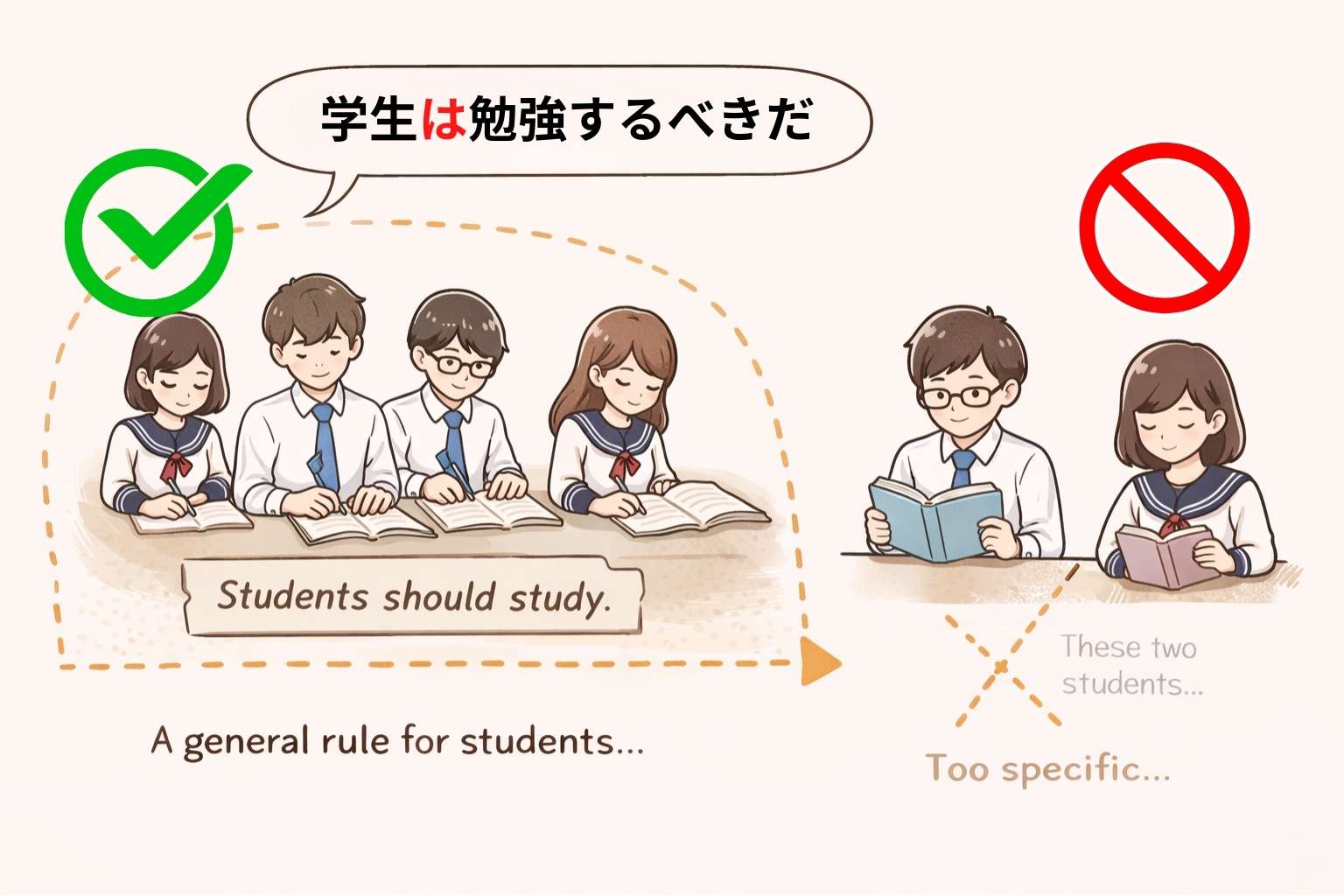
学生は勉強するべきだ。
Literal meaning:
“Students should study.”
Hidden nuance:
(I am talking about students as a group)
(I am not talking about everyone)
(This is a general rule, not an exception)
は turns this into a general statement.
Without は,
the sentence would sound too specific or situational.
Example 3
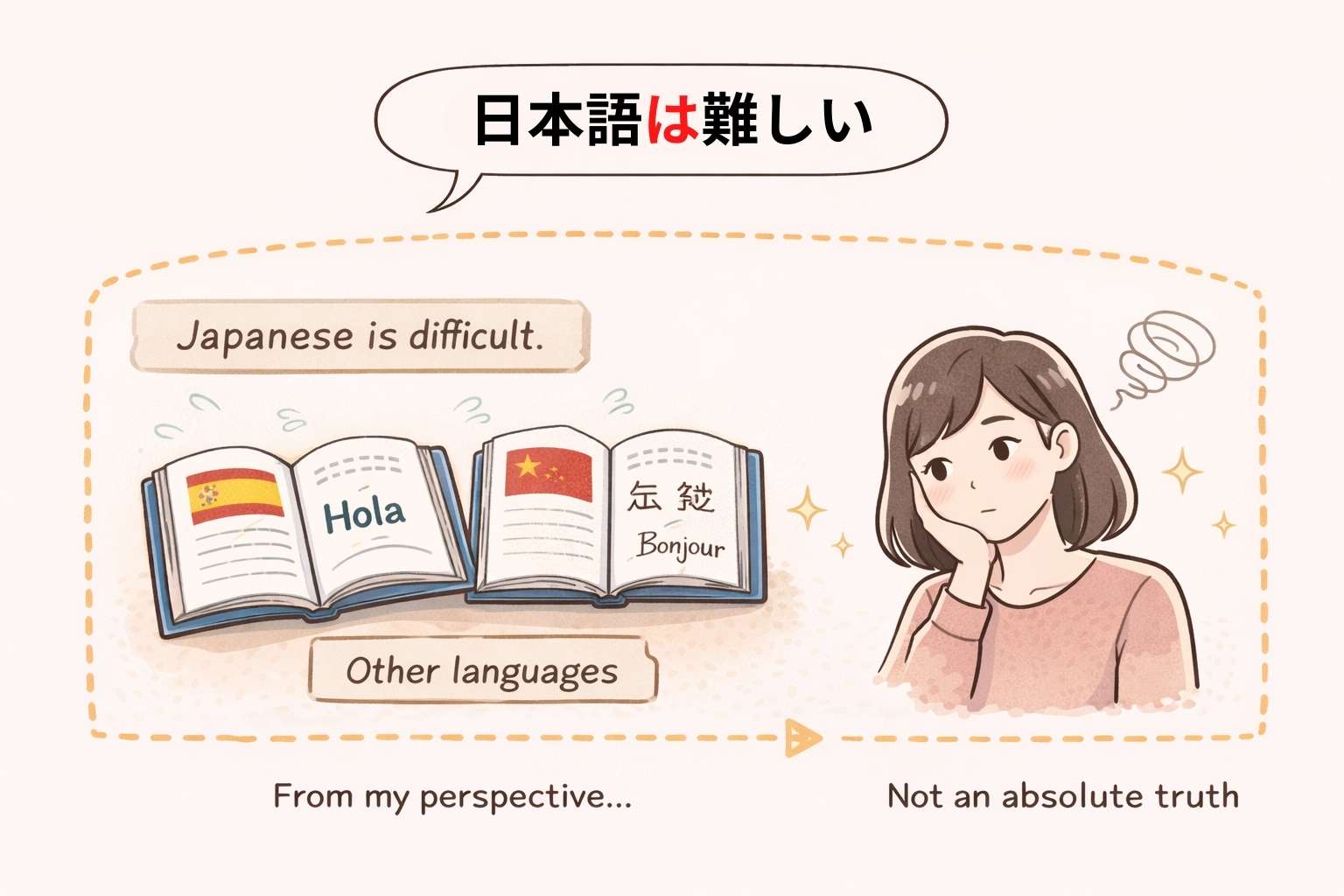
日本語は難しい。
Literal meaning:
“Japanese is difficult.”
Hidden nuance:
(Compared to other languages)
(From my experience or perspective)
(This is not an absolute truth)
は softens the statement
by placing it inside a comparison frame.
Key idea for は (Level 4)
は often says:
“This is my frame.”
“This is the category I am talking about.”
“There is something outside this sentence.”
が : Limitation / Emphasis
(Why this and not others)
が is much more direct.
It pulls one element forward
and says: this is the point.
Example 1
私が行きます。
Literal meaning:
“I will go.”
Hidden nuance:
(Not you, not them — me)
(I am taking responsibility)
(I am volunteering or insisting)
This sentence is rarely neutral.
が adds emotional weight:
・determination
・correction
・sometimes tension
Example 2
先生が来ました。
Literal meaning:
“The teacher came.”
Hidden nuance:
(This is the important event)
(This changes the situation)
(People were waiting or wondering)
The focus is not “arrival” itself,
but who arrived.
Example 3
雨が降っています。
Literal meaning:
“It is raining.”
Hidden nuance:
(This is happening now)
(This explains the situation)
(This is new or relevant information)
が makes the sentence informationally sharp.
Key idea for が (Level 4)
が often says:
“This is the answer.”
“This is what matters now.”
“Pay attention here.”
Common N2 mistakes (and why they feel wrong)
Mistake 1
❌ 私がコーヒーを飲みます。
Why it feels strange:
There is no strong contrast.
There is no competition.
There is no reason to emphasize “me”.
The sentence sounds emotionally heavier than needed.
Mistake 2
❌ 学生が勉強するべきだ。
Why it feels wrong:
It sounds like specific students,
not students in general.
The speaker seems to be pointing,
not generalizing.
Mistake 3
❌ コーヒーが飲みます。
Why it fails:
が removes contrast.
The sentence loses its background meaning.
The listener asks:
“Why coffee? Compared to what?”
Level 4 summary (what you can explain)
At Level 4, you can explain:
・は
→ contrast
→ generalization
→ background comparison
・が
→ limitation
→ emphasis
→ emotional or situational focus
This is still explainable knowledge.
What you will learn in Level 5 (coming next)
In Level 5, the focus shifts again.
You will learn:
・how は and が work across sentences
・how context builds silently
・why the same sentence changes meaning in a paragraph
👉 Next article : What Is the Difference Between は and が? Context and Focus in Japanese (Level 5)