MENU
  • Book a lesson
Why Why Nihongo
Learn Japanese Online with a Native Otaku Teacher — Grammar, Expressions, and Nuance
  • Book a lesson
Why Why Nihongo
  • Book a lesson
  1. Home
  2. Japanese
  3. Speech style

Speech style– category –

JapaneseSpeech style

This category focuses on speech styles such as casual, polite, and formal Japanese.

Articles explain how tone, distance, and social context affect language choice, and why switching styles changes nuance.

It helps learners sound more natural and appropriate in real conversations.

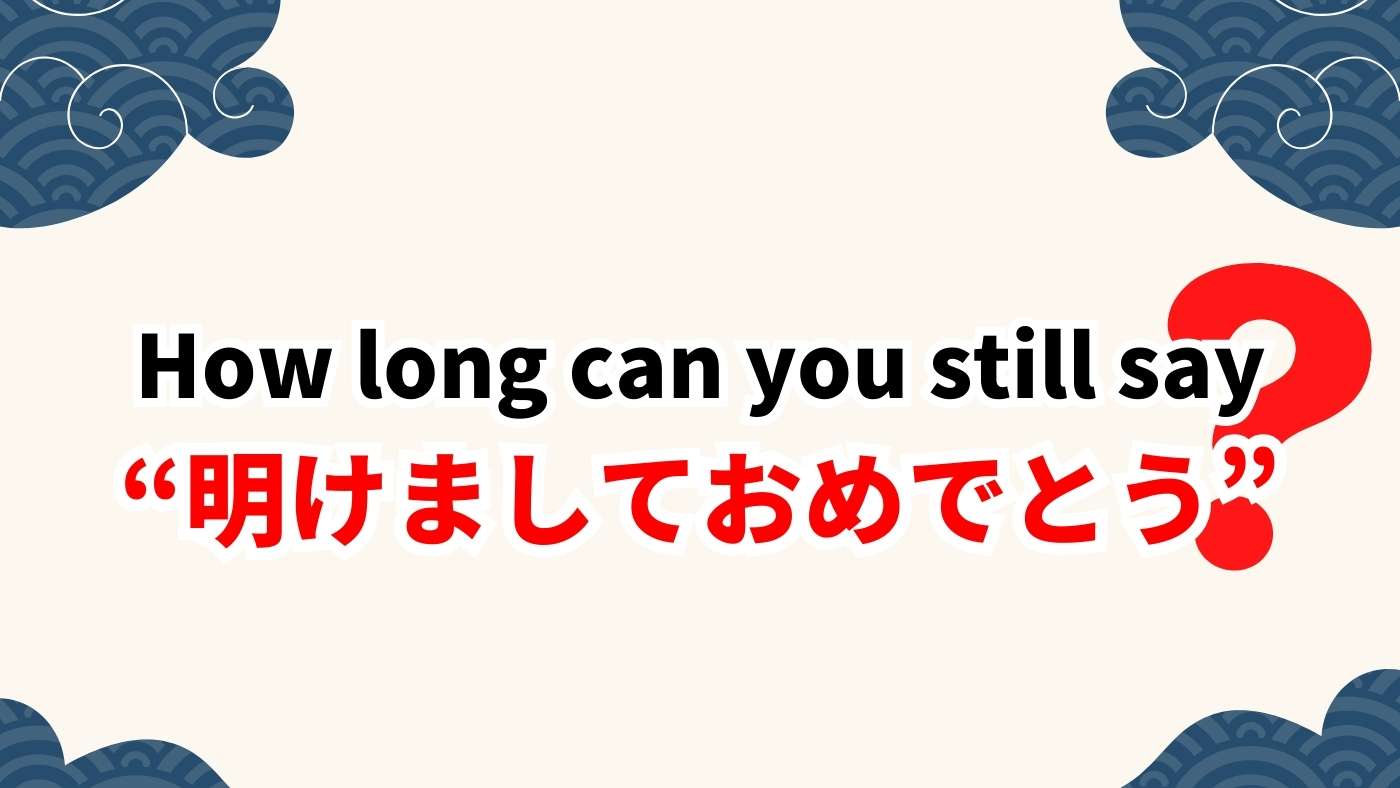
  • How Long Can You Still Say “明けましておめでとう”?
    Speech style

    How Long Can You Still Say “明けましておめでとう”? Timing, Variations, and Social Context in Japanese (N5-N4)

    There is no fixed deadline for saying “明けましておめでとう.” For N5–N4 learners, this article explains how long Japanese people actually use New Year greetings, how timing and relationships matter more than dates, and how to choose natural expressions from casual to formal.
    2026-01-09
  • “Yoroshiku Onegaishimasu” written in red text over a Japanese writing practice background, with the subtitle “What It Really Means” — a featured image for a Japanese language blog.
    Speech style

    “Yoroshiku Onegaishimasu” Explained: A Complete Guide by a Native Japanese Teacher

    What does “yoroshiku onegaishimasu” really mean in Japanese? Learn how to use this essential phrase correctly, with cultural context and real examples.
    2025-06-26
  • Speech style

    Exploring Japanese Character Speech Styles: From Yakuza Slang to Elegant Madam Talk

    What Is Yakuwari-go? Yakuwari-go (役割語) refers to stylized ways of speaking used by characters in Japanese media to reflect their role—such as age, gender, or social status. These speech patterns are rarely used in real life, but often...
    2025-05-28
1
Aiko
Online Japanese teacher
Spotify| Instagram | Threads| Patreon

Hi! I’m Aiko, a native Japanese teacher who loves anime, manga, and games.

Thanks for reading my guide.
If you’re just starting Japanese, even if you’re still learning hiragana —or simply want to enjoy casual conversation, you’re very welcome.
My one-on-one online lessons are flexible and relaxed. There’s no pressure to speak perfectly — mistakes are always welcome😊

こんにちは!Aikoです。アニメ・マンガ・ゲームが大好きな日本語講師です。このブログがあなたの日本語学習の役に立てば嬉しいです。日本語を楽しく学びたい方、レッスンでお待ちしています。
Book a Lesson
Popular articles
  • Nihon or Nippon?
    Nihon, Nippon, or Japan? What’s the Difference and When to Use Each — Explained by a Native Japanese Teacher
  • “Yoroshiku Onegaishimasu” written in red text over a Japanese writing practice background, with the subtitle “What It Really Means” — a featured image for a Japanese language blog.
    “Yoroshiku Onegaishimasu” Explained: A Complete Guide by a Native Japanese Teacher
  • Japanese Harassment Terms Explained: What Are ‘Sekuhara’, ‘Kasuhara’ and Other Common Abbreviations?
  • Common Japanese Counters Explained by a Native Teacher: 日 (Days), 人 (People), 個 (Things), 匹 (Animals)
  • Japanese Numbers 1–100 : On’yomi vs Kun’yomi Readings
  • “Sumimasen” in Japanese: Is It “Sorry,” “Thank You,” or “Excuse Me”?
  • 10 Common Japanese Fillers Like「Etto、Ano、Maa」 and How to Use Them – Explained by a Native Japanese Teacher
  • How to Use the Japanese Conjunction “〜し” – Grammar, Examples, and Meaning— Explained by a Native Japanese Teacher
Categories
  • Conjenction
  • Expression
  • Grammar & Usage
  • Greetings
  • History
  • Japanese
  • Kanji
  • Nuance & Meaning
  • Number
  • Particle
  • Phonetics
  • Speech style
  • は(Wa) and が(Ga)

© Why Why Nihongo.