MENU
  • Book a lesson
Why Why Nihongo
Learn Japanese Online with a Native Otaku Teacher — Grammar, Expressions, and Nuance
  • Book a lesson
Why Why Nihongo
  • Book a lesson
  1. Home
  2. Japanese
  3. Podcast Lesson Notes

Podcast Lesson Notes– category –

JapanesePodcast Lesson Notes

Companion lesson notes for the podcast. Clear structure, essential vocabulary, and cultural explanations to support your Japanese learning.

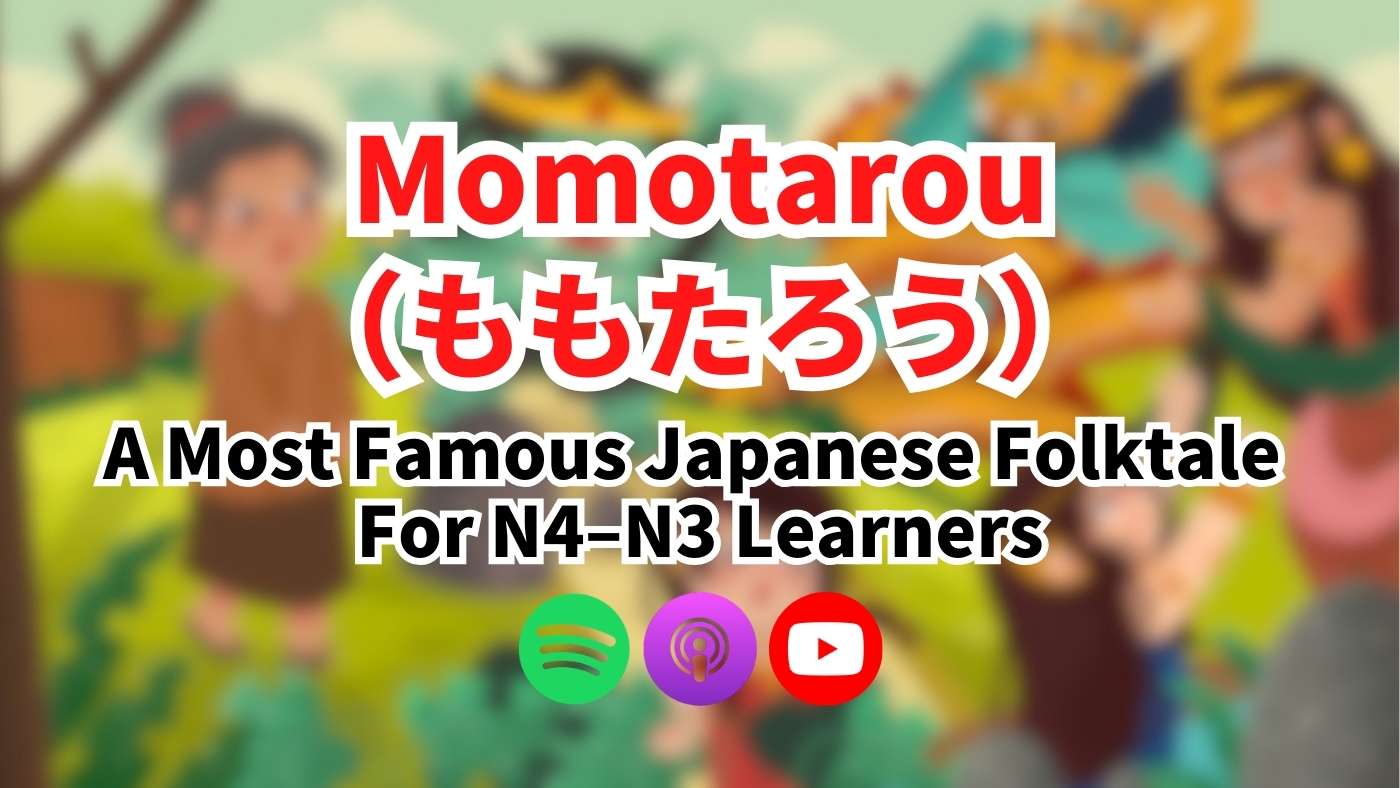
  • Momotaro(ももたろう) Japanese Folktale Explained in Easy Japanese (N4–N3)
    Podcast Lesson Notes

    Momotaro(ももたろう) Japanese Folktale Explained in Easy Japanese (N4–N3) Podcast Companion

    Read the full Momotaro story in easy Japanese for JLPT N4–N3 learners. This lesson note includes vocabulary, quiz questions, and cultural explanations. Use it together with the podcast episode.
    2026-02-27
  • Why “Gogo 10-ji(午後10時)” Sounds Strange in Japanese
    Podcast Lesson Notes

    Why “Gogo 10-ji(午後10時)” Sounds Strange in Japanese | Natural Japanese Time Expressions (N5–N4) Podcast Companion

    Do you say 「午後10時」 for 10 PM? It is grammatically correct, but it sounds strange. Discover why native speakers prefer 「夜10時」 and how Japanese time expressions really work.
    2026-02-17
  • Be careful with “anata” (あなた) – why Japanese people avoid it and how beginners should speak naturally (N4–N5)
    Podcast Lesson Notes

    Why Japanese Learners Should Be Careful with 「Anata(あなた/貴方)」 (N5–N4) Podcast Companion

    Japanese people almost never use 「あなた」 to address the person in front of them. In this article, we will look at the history and meaning of 「あなた」 and explain why modern Japanese speakers usually avoid it.
    2026-02-04
1
Aiko
Online Japanese teacher
Spotify| Instagram | Threads| Patreon

Hi! I’m Aiko, a native Japanese teacher who loves anime, manga, and games.

Thanks for reading my guide.
If you’re just starting Japanese, even if you’re still learning hiragana —or simply want to enjoy casual conversation, you’re very welcome.
My one-on-one online lessons are flexible and relaxed. There’s no pressure to speak perfectly — mistakes are always welcome😊

こんにちは!Aikoです。アニメ・マンガ・ゲームが大好きな日本語講師です。このブログがあなたの日本語学習の役に立てば嬉しいです。日本語を楽しく学びたい方、レッスンでお待ちしています。
Book a Lesson
Popular articles
  • Nihon or Nippon?
    Nihon, Nippon, or Japan? What’s the Difference and When to Use Each — Explained by a Native Japanese Teacher
  • “Yoroshiku Onegaishimasu” written in red text over a Japanese writing practice background, with the subtitle “What It Really Means” — a featured image for a Japanese language blog.
    “Yoroshiku Onegaishimasu” Explained: A Complete Guide by a Native Japanese Teacher
  • Japanese Harassment Terms Explained: What Are ‘Sekuhara’, ‘Kasuhara’ and Other Common Abbreviations?
  • Illustration explaining why the Horse Year in 2026 is written as 午年 instead of 馬年 in the Japanese zodiac.
    2026 Is the Horse Year! But Why Is the Horse Year Written as 午年, Not 馬年?
  • Common Japanese Counters Explained by a Native Teacher: 日 (Days), 人 (People), 個 (Things), 匹 (Animals)
  • Japanese Numbers 1–100 : On’yomi vs Kun’yomi Readings
  • “Sumimasen” in Japanese: Is It “Sorry,” “Thank You,” or “Excuse Me”?
  • 10 Common Japanese Fillers Like「Etto、Ano、Maa」 and How to Use Them – Explained by a Native Japanese Teacher
Categories
  • Conjenction
  • Expression
  • Folktales
  • Grammar & Usage
  • Greetings
  • History
  • Japanese
  • Kanji
  • Nuance & Meaning
  • Number
  • Particle
  • Phonetics
  • Podcast Lesson Notes
  • Speech style
  • は(Wa) and が(Ga)

© Why Why Nihongo.