

Why “Yoroshiku Onegaishimasu” Is So Confusing
“Yoroshiku onegaishimasu” is one of the most used—and most mysterious—phrases in Japanese. It’s hard to translate directly into English, and its meaning changes depending on the situation. As a learner, you might wonder: What am I really saying when I use it?
Let’s break it down and explore its history, function, cultural background, and how to use it naturally in conversation.
The Origin of “Yoroshiku Onegaishimasu”
Old Japanese: The Word “Yoroshiku”
The word “yoroshiku” comes from the classical adverb 宜しく (yoroshiku), which meant “properly,” “fittingly,” or “ideally.” It appears in classic literature like the Manyoshu (8th century) and The Tale of Genji (11th century).
Medieval to Edo Period: Set Phrase in Letters
In samurai and merchant correspondence, the phrase “yoroshiku sourou” (よろしく候) was a polite way of saying “please take care of things” or “I trust you to handle it well.”
Meiji Period Onward: Modern Phrase Form
By the modern era, the phrase evolved into “yoroshiku onegai moushiagemasu” and later, the now-common “yoroshiku onegaishimasu,” used in business, school, and everyday situations.
What Does It Really Mean? Context Is Everything
“Yoroshiku onegaishimasu” doesn’t have one fixed meaning. Instead, it carries different nuances depending on context:
| Situation | Meaning | English Equivalent |
|---|---|---|
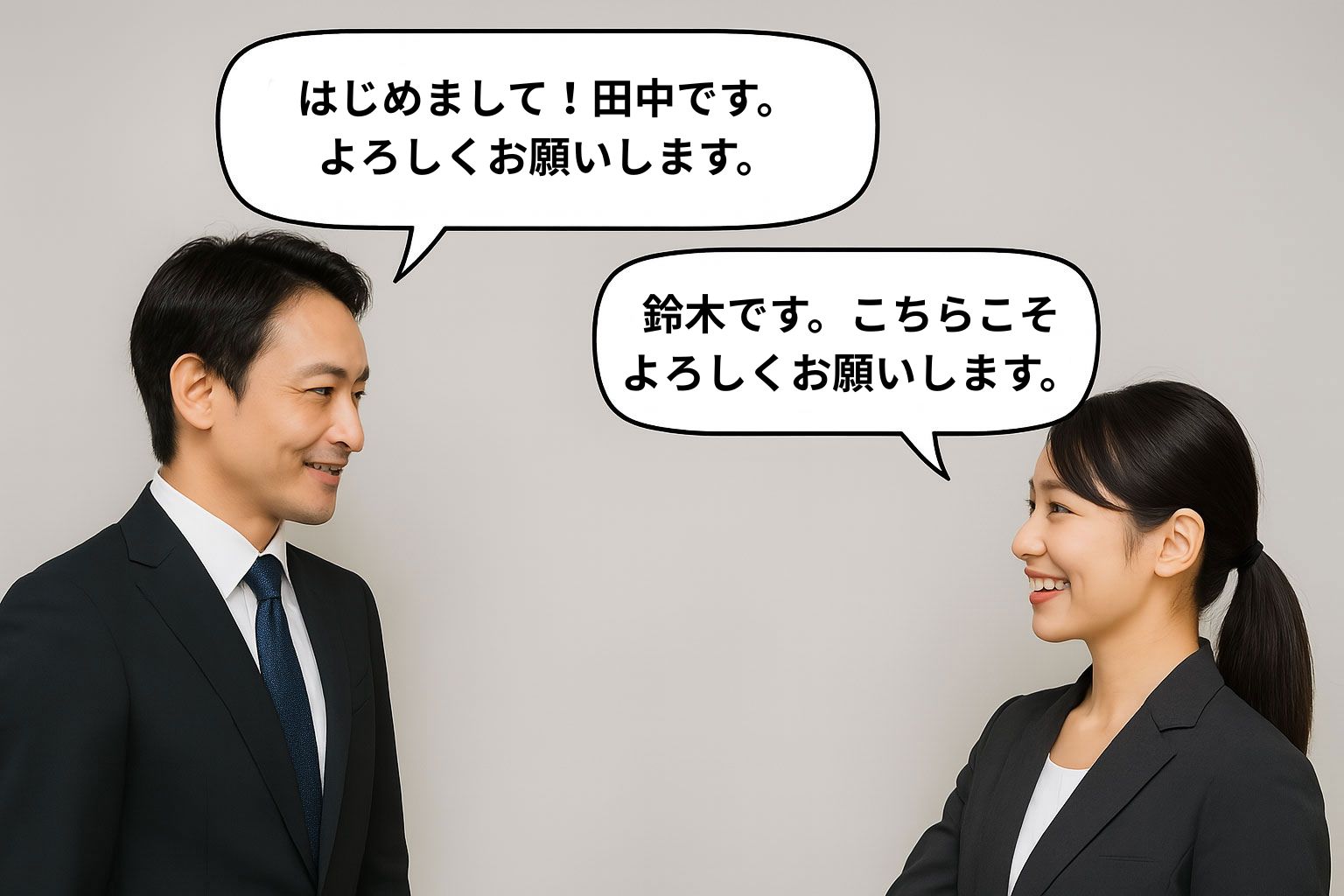
| First meeting | Hope for a good relationship | Nice to meet you |
| Asking a favor | Polite request for help/cooperation | Thank you in advance |
| Ending a message | Future connection or politeness | Best regards / Take care |
| In formal writing | Respect and indirect request | I appreciate your continued support |
It’s a kind of social lubricant—a way of showing respect, hope, and connection without stating things too directly.
Japan vs West: Different Views on Human Relationships
The core of “yoroshiku onegaishimasu” is not just language—it’s culture. Japanese communication is based on interdependent relationships, while Western culture often emphasizes independent individuals.
| Concept | Japan (Interdependent) | Western (Independent) |
|---|---|---|
| Relationship basis | Exists before interaction | Formed through choice |
| Communication style | Indirect, polite, empathetic | Clear, direct, intentional |
| Focus of expression | Future-oriented relationships | Present-moment intentions |
So instead of saying exactly what you want, Japanese uses phrases like “yoroshiku onegaishimasu” to signal a desire for harmony and cooperation.
Why It’s So Hard to Translate into English
The phrase contains no subject, no specific verb, and no object. That’s why translating it directly is nearly impossible. To make it work in English, you have to ask:
- What is the speaker asking for?
- What kind of relationship is being formed?
- What action is being expected?
How to Learn and Use “Yoroshiku Onegaishimasu”
If you’re a Japanese learner and want to use “yoroshiku onegaishimasu” naturally, here’s a simple self-study plan:
Step 1: Learn the Core Situations
Start by understanding the four main situations where this phrase is used:
| Context | Example Meaning | English Equivalent |
|---|---|---|
| First meeting | Let’s build a good relationship | Nice to meet you |
| Asking for help | I hope you can assist | Thank you in advance |
| Ending contact | I want to keep in touch | Take care / Stay in touch |
| Email closing | Thank you and goodbye politely | Best regards / Kind regards |
Step 2: Memorize Key Phrases
Practice set phrases using “yoroshiku onegaishimasu” with context:
- はじめまして。マリアです。どうぞよろしくお願いします。
- 宿題を見ていただけますか? よろしくお願いします。
- 来週のミーティング、よろしくお願いします。
Step 3: Listen for It in Real Life
Watch anime, dramas, YouTube, or real-life interviews. Notice how and when people say it.
Focus on:
- Who says it
- What tone they use
- What happens before and after
Step 4: Practice Out Loud
Even alone, say the full expressions out loud. Use a mirror or record yourself. It helps to match your tone and facial expression to the situation. “よろしくお願いします” consists of 11 moras (よ・ろ・し・く・お・ね・が・い・し・ま・す). Practicing with this natural rhythm helps you sound smoother and more fluent in Japanese.
Step 5: Try It in Conversation
Use it in class, language exchange, or online messages. Try different versions depending on the situation (see next section).
ariations of “Yoroshiku” and When to Use Them
The phrase “yoroshiku onegaishimasu” can be adjusted in two main ways to match the level of formality:
- By adding the adverb that comes before it
- By changing the ending verb form
① Adverbs that modify “yoroshiku onegaishimasu”
Only two adverbs are commonly used:
- どうぞ (douzo): Polite and friendly, often used in conversation
- 何卒 (nani tozo): Very formal, mostly used in written or professional contexts
② Verb endings that affect politeness level
- します (shimasu): Standard polite form (used most widely, 3 moras/ shi ma su)
- 致します (itashimasu): More respectful (humble) form, common in business speech (5 moras/ i ta shi ma su)
- 申し上げます (moushiagemasu): Extremely formal and respectful, used in official documents or job applications (7 moras / mo u shi a ge ma su)
By combining these two elements, you can fine-tune the level of formality to suit any situation.
Here’s a chart to help you visualize the different variations. The forms above “よろしくお願いします(yoroshiku onegaishimasu)” are more casual, and those below are more polite.
| Variations | Common Usage Scene | Politeness Level | Typical Context |
|---|---|---|---|
| よろ (yoro) | Extremely casual situations | Very low (ーーー) | Slang among very close friends or youth |
| よろしく (yoroshiku) | Casual speech and everyday requests | Low (ーー) | Among very close friends or family |
| よろしくね (yoroshiku ne) | Light requests to familiar people | Slightly low (ー) | Soft and friendly impression |
| よろしくお願いします | Business, first meetings, requests | Polite (0) | Most standard and most commonly used |
| よろしくお願い致します | Slightly more respectful than standard | Polite (+) | Formal settings, respectful tone |
| どうぞよろしくお願いします | When aiming for extra politeness | High (+) | Formal greetings, polite conversation openings |
| どうぞよろしくお願い致します | When aiming for even more politeness | Higher (++ ) | Official letters, formal business correspondence |
| 何卒よろしくお願い申し上げます | Formal documents and serious requests | Very high (+++) | Job applications, official written communication |
⚠️ Important Tips
If you’re unsure which version to use, always choose the more polite one. Being “too polite” is far less risky than sounding “too casual,” especially in Japanese culture. Avoid using casual forms like “yoroshiku ne” or “yoro” with people of higher status or in formal situations.
Summary
- “Yoroshiku onegaishimasu” changes meaning depending on context (first meetings, favors, emails, etc.)
- It has deep cultural roots in Japan’s view of social harmony
- The phrase can be customized with adverbs and verb endings to fit the formality level
- When in doubt, choose the more polite version
- Avoid casual variations when speaking to someone senior
📢 Join My Online Lessons!
Want to master phrases like yoroshiku onegaishimasu and sound more natural in Japanese?
Join my 1-on-1 or group online lessons, where I teach Japanese with cultural tips, real examples, and personalized support.
👉 Book a lesson here or find me on Instagram @koni_bali
Looking forward to seeing you in class. どうぞよろしくお願いします!