Introduction
Happy New Year!
2026 is the Horse Year (うまどし) 🐴.
However, the kanji used for the zodiac is not 馬 (うま/horse). The kanji that is actually used is 午.
( Note: 午 and 牛(うし/cow🐮) may look similar, but they are completely different kanji. )
In Japanese, the kanji 午 does not mean “horse.” It does not carry the meaning “horse” in Japanese.
So why is “Horse Year” written as 午年, not 馬年?

Why Why Point : Why 午, Not 馬?
The kanji for horse is 馬. However, in the zodiac, 午 is used instead.
In modern Japanese, 午 is rarely used except in:
- 午前 (a.m.)
- 午後 (p.m.)
- 正午 (noon)
This strange feeling is not a mistake or an exception. There is a reason for this in the zodiac system (干支, eto) itself.
What Is the Japanese Zodiac (干支, eto)?
The zodiac (干支, eto) is a 12-year cycle based on twelve signs (十二支, juunishi), each represented by an animal.
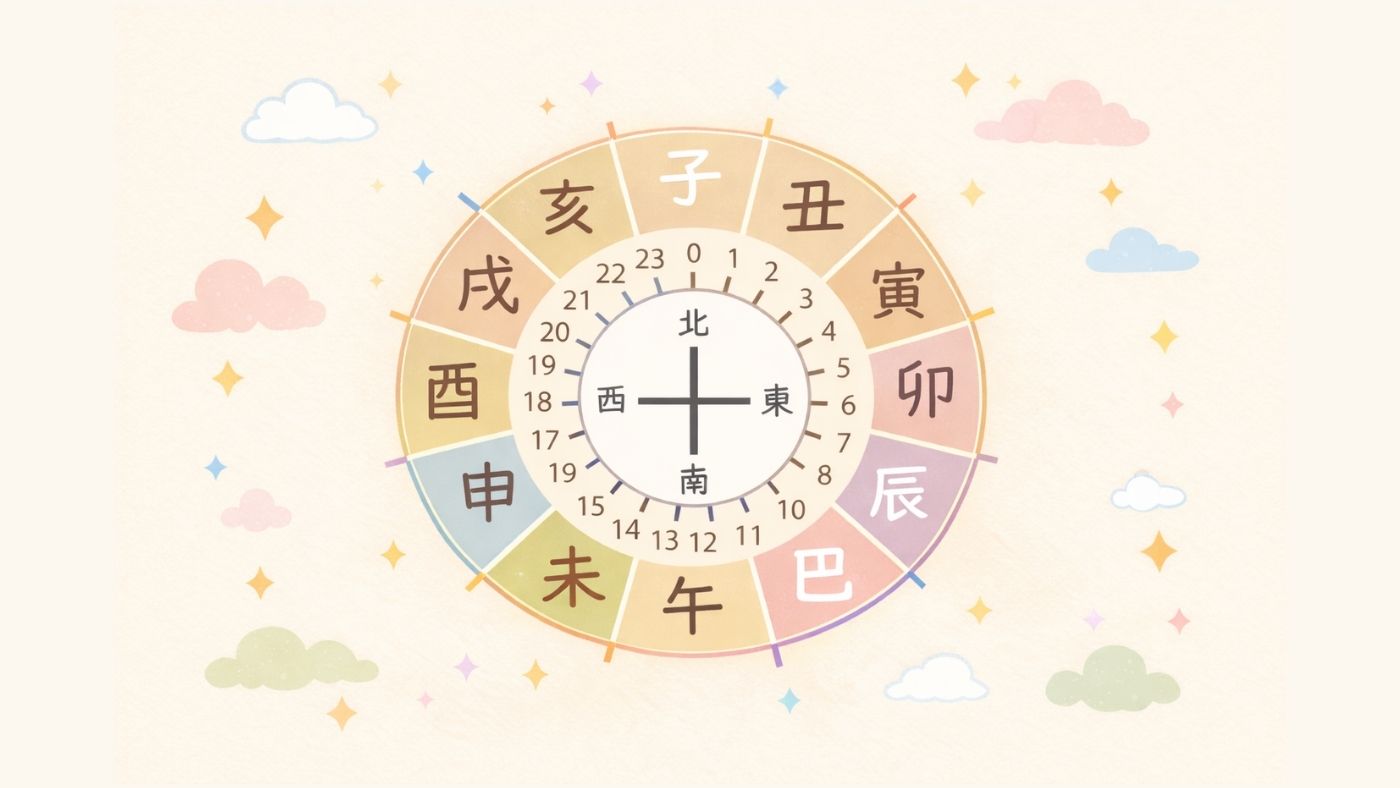
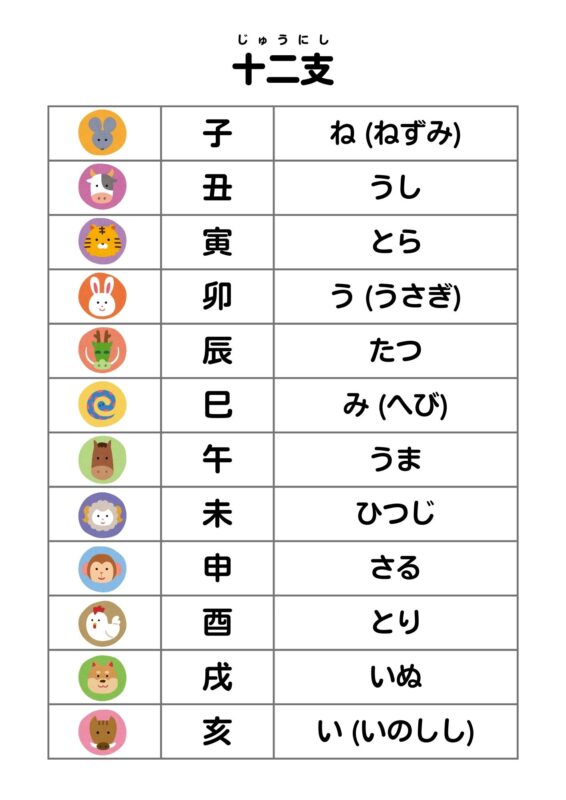
It was originally created to organize:
- years
- months
- time periods
- directions
Each of the twelve signs was assigned specific positions within this system.
In modern Japan:
- Most people know the zodiac sign of their birth year
- The idea of “what zodiac year it is this year” still remains
- Zodiac-based fortune-telling is common
In other words, the zodiac system itself has faded, but the zodiac remains as culture.
A Cultural Concept — 年男 and 年女
In Japan, there is also a cultural concept called
年男 (toshi-otoko) and 年女 (toshi-onna).
- 年男: a man whose birth-year zodiac matches the current year
- 年女: a woman whose birth-year zodiac matches the current year
For example, in 2026 (the Year of the Horse),
people born in a Horse year are considered 年男 or 年女.
This idea is often associated with zodiac-based fortune-telling,
but it is not limited to fortune-telling.
It also functions as:
- a way to be aware of one’s age
- a shared topic for casual conversation
- a cultural marker that connects personal life cycles to a larger time cycle
In this sense, 年男 and 年女 are cultural labels, not scientific categories.
If you’re curious about your own zodiac sign, I made a simple PDF where you can check it by birth year.
→ Download the zodiac PDF
Why Is 2026 the Year of 午?
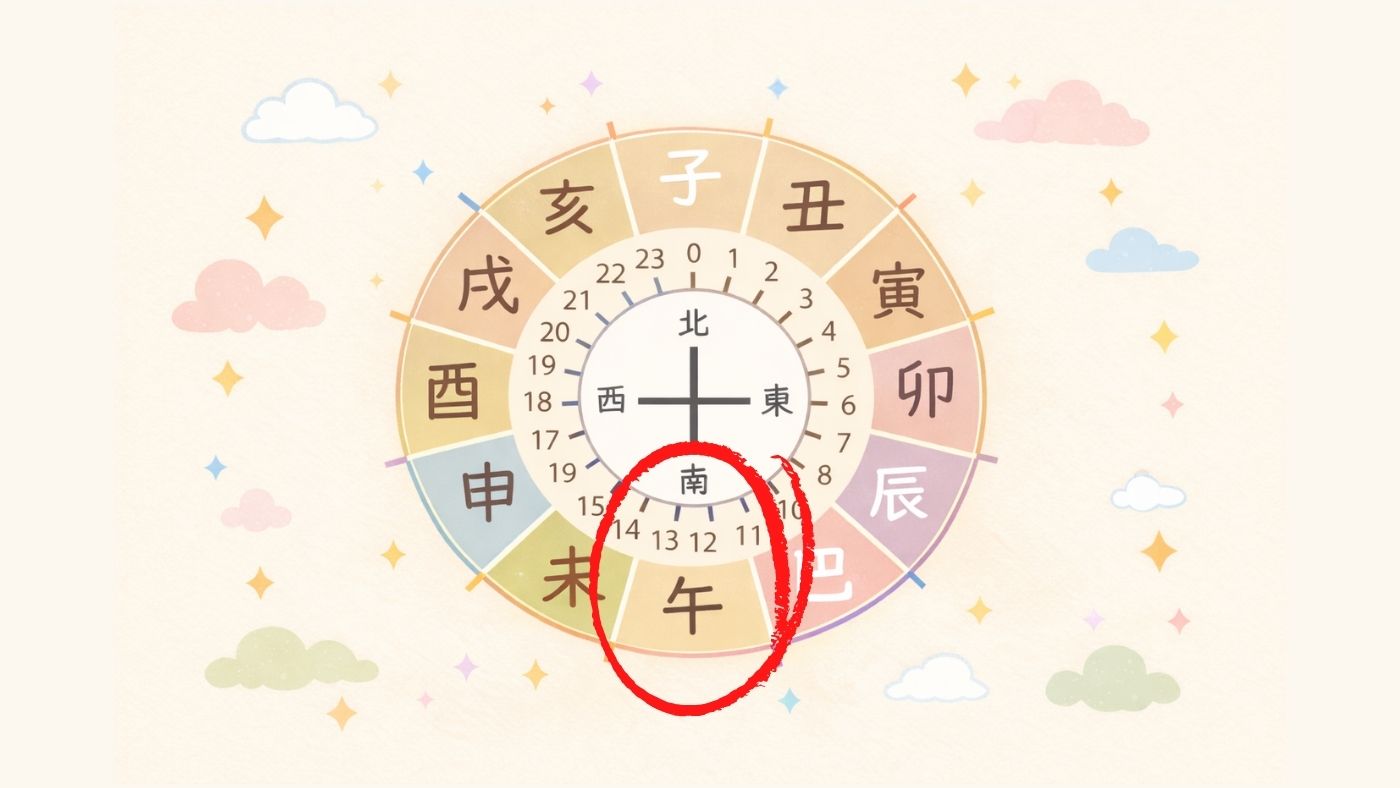
The zodiac (干支, eto) is a 12-year cycle.
- Each year moves forward in order
- The cycle does not reset or change
As a result, 2026 naturally becomes the Year of 午.
If we look at the flow of years:
- 2026: 午年 (Horse) 🐴
- 2027: 未年 (Sheep) 🐑
- 2028: 申年 (Monkey) 🐵
There is no special meaning here.
It is simply the next year in the sequence.
午 Was Not Originally an Animal Kanji
The kanji 午 did not originally mean “horse.”
- It was an abstract symbol
- It represented time and divisions
- It was part of the zodiac system(干支/Eto) created in ancient China
Later:
- Animals were added
- This made the system easier to remember
- The animal “horse” was assigned to 午
So the logic is not:
It is the Horse Year, so we write 午年
The real logic is:
午 is the symbol, and “horse” was later assigned to it
午 Was Also the Name of a Time Period
In the past, 午 was also used as the name of a time period.
- 午の刻 (うのこく / U time zone ) : around 11:00–13:00
- The center of this period was noon (12:00)
This time system was used:
- In daily life until the Edo period
- Through the early Meiji period
In 1886, Japan officially adopted the Western 24-hour clock system.
After that, this time system ended.
Why Did 午 Survive in Modern Japanese?
Even though the system ended, 午 did not disappear completely.
It survives today only in a few fixed words:
- 正午
- 午前
- 午後
Outside of these expressions, 午 is rarely used.
In other words, 午 survived not as a general kanji, but as a time reference point
What Time Do 正午, 午前, and 午後 Represent?
正午 (noon)
- Exactly 12:00
- The center of 午の刻
- The reference point for daytime
午前 (a.m.)
- Before noon
- Roughly 0:00–12:00
午後 (p.m.)
- After noon
- Roughly 12:00–24:00
So far, this is the definition.
A Common Mistake for Japanese Learners
Until When Is “午後◯時” Natural?
Why Does “午後10時” Sound Unnatural?
❌ 午後10時
⭕ 夜10時
“午後10時” is logically correct.
It is not wrong as a way to read the clock.
However, native Japanese speakers almost never say it.
Why?
- 午後 feels like an extension of daytime and early evening
- At night, Japanese prefers time periods over numbers
Because of this:
- 午後3時
- 午後5時
sound natural, but:
- 午後10時
sounds very strange.
As a general guideline:
- “午後◯時” sounds natural until around 5–6 p.m.
- After that, people usually say:
- 夜◯時
- ◯時 (when it is clear from context)
Summary
- 午 does not mean “horse.”
The kanji 午 originally had nothing to do with animals. - 午 was a time symbol in the zodiac system (干支, eto), not an animal name.
It referred to a specific time period centered around noon. - The zodiac (干支, eto) was originally a Chinese system
used to organize years, time periods, and directions, not fortune-telling. - The twelve animal signs are called the Twelve Zodiac Signs (十二支, juunishi).
The zodiac forms a 12-year cycle based on these twelve signs. - 2026 is 午 and 2027 is 未 simply because the cycle continues.
There is no special meaning—just sequence. - 正午, 午前, 午後, and expressions like 丑三つ時
are remnants of this older time-based system still visible in modern Japanese.
The zodiac system itself has faded, but its structure still lives on in language and culture.
Would you like to learn more about the zodiac?
Would you like to try zodiac-based fortune-telling in Japanese?
I’m always happy to talk about it with you in an online lesson 😊
Let’s keep exploring Japanese a little deeper this year!